 Play on CrazyGames ↗
The idea
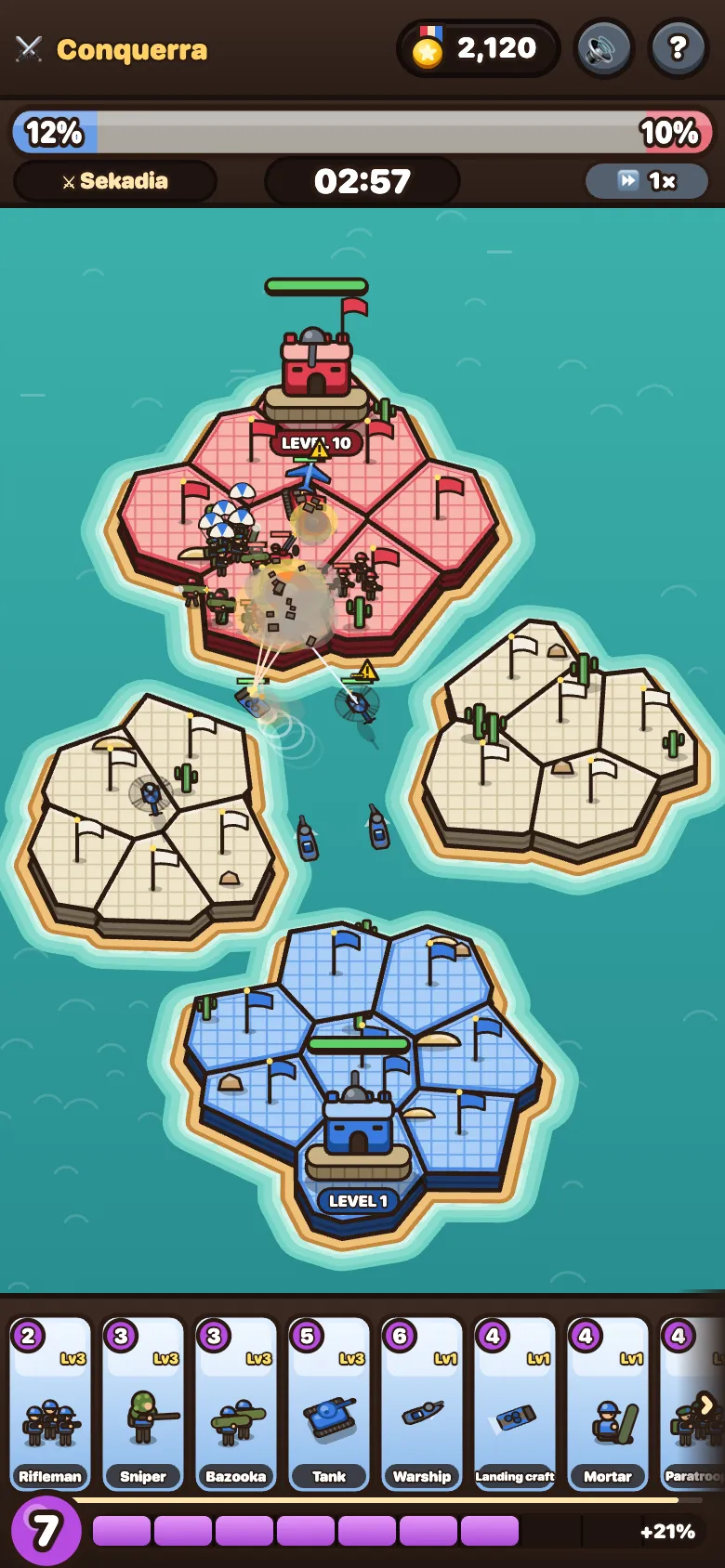
Each battle is a three-minute fight on a small island. Your energy bar fills on its own, and every unit costs energy: drag a card onto a region to send troops there, then drag from a region full of idle soldiers to move them to the front. Hold more land when the clock runs out, or destroy the enemy headquarters, to win.
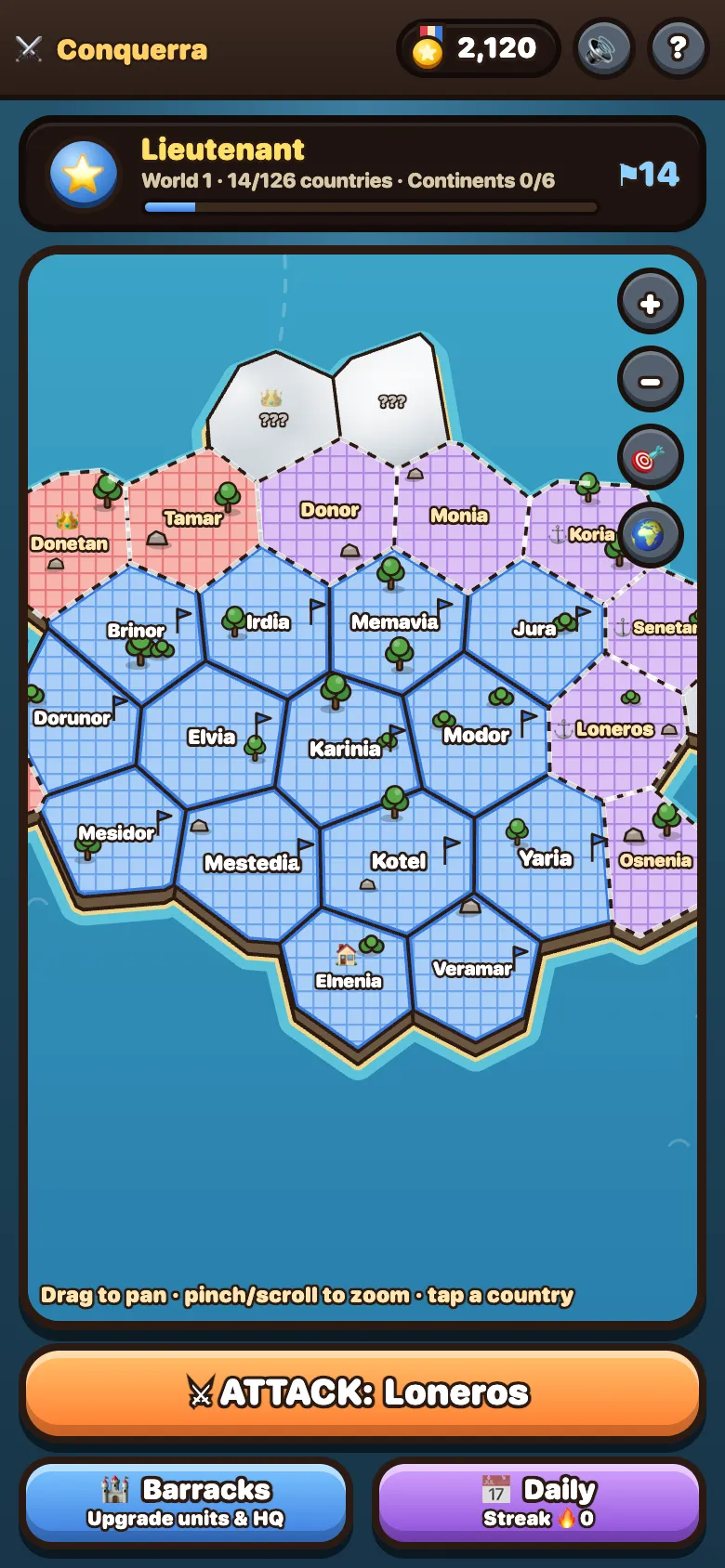
Between battles the game becomes a map. Every country you take reveals its neighbours under the fog of war, rival empires counterattack your borders, and taking an empire’s capital weakens all of it.
- 11 units that counter each other. Riflemen, snipers, bazookas, tanks, mortars, paratroopers, helicopters, AA guns, bombers, warships and landing craft. Reading the enemy’s army and answering it is the core skill.
- Sea battles. Island countries are fought across water: ferry troops with landing craft, shell the coast with warships, fly over with bombers.
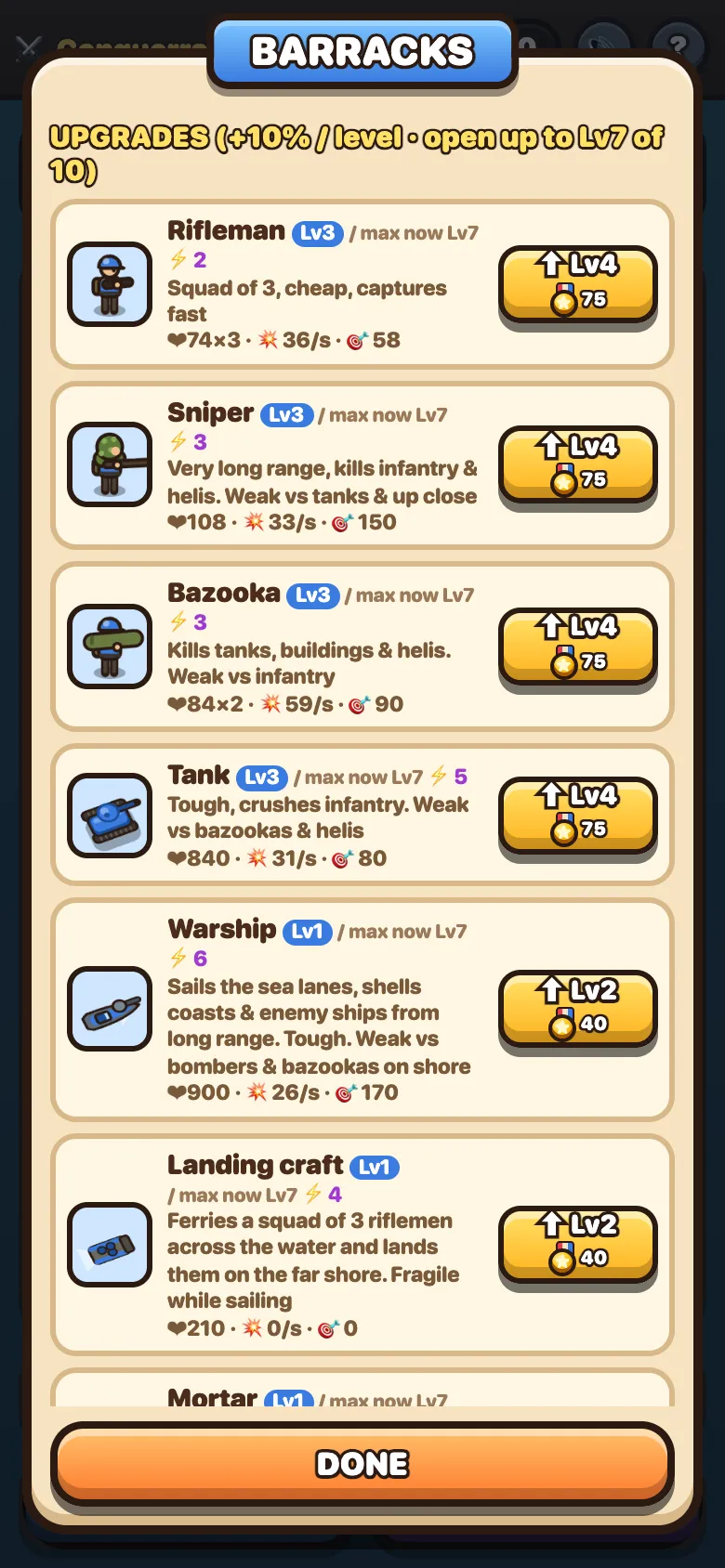
- Long-term goal. Medals earned in every battle upgrade each unit. Conquering a whole continent raises your army’s level cap, and uniting the world starts a New World with stronger enemies.
One file, drawn in code
The whole game is a single HTML file with no image assets: the islands, units, icons and effects are all drawn by the game’s own canvas code, and maps are generated procedurally. The same drawing code renders the store covers and trailer frames, so the art on a store page always matches the game.
A simulation you can run without a screen
The battle rules live in a section that never touches the page. It runs the same way in the browser and in Node, so whole matches can be played by bots in batches to balance unit costs, counters and enemy strength before a change reaches players.
One game, every web platform
A small build script turns that one file into a build for each platform: CrazyGames (its SDK for cloud saves, gameplay events and ads), YouTube Playables (cloud saves, pause and audio from YouTube, rewarded ads) and a plain web build with browser saves for other sites. Each build is checked to load nothing from outside except its own platform’s SDK.