The idea
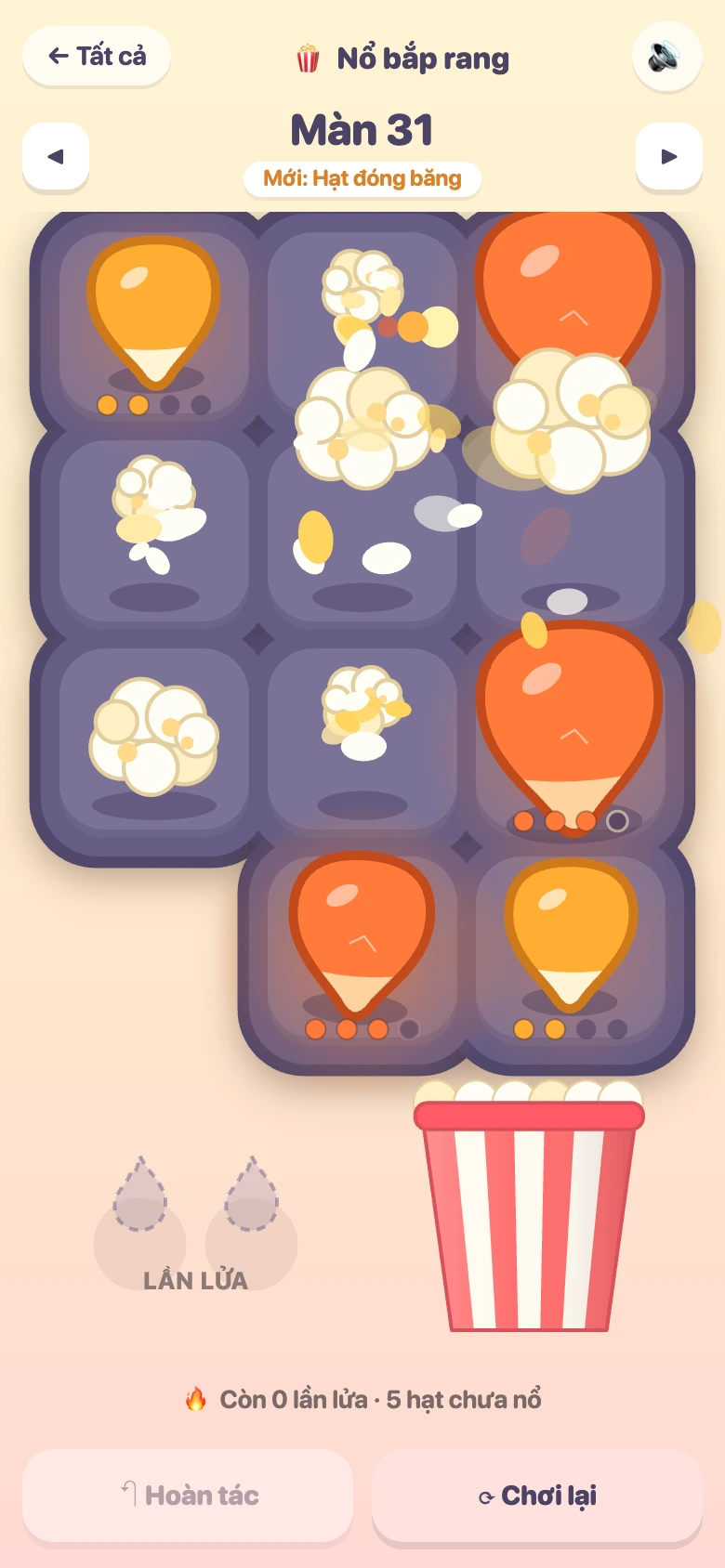
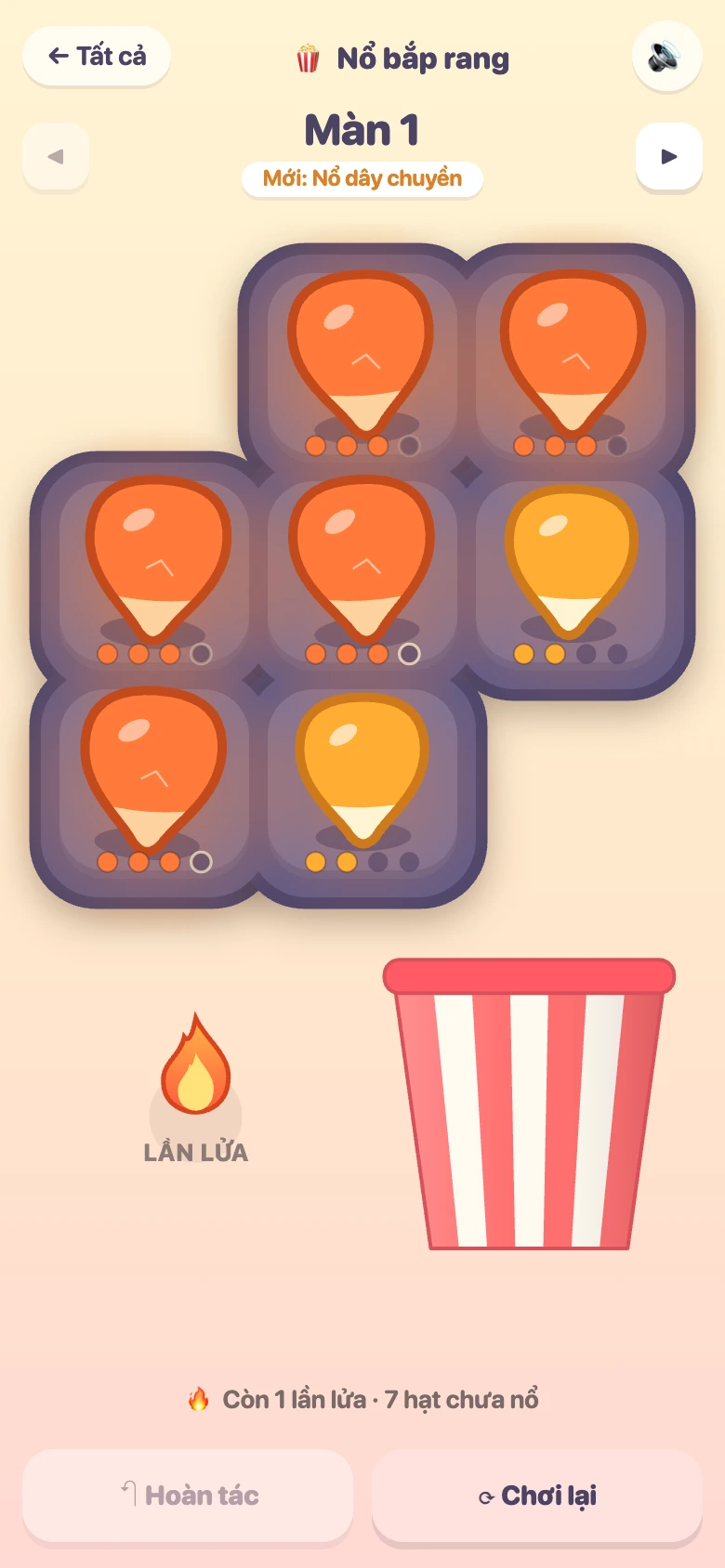
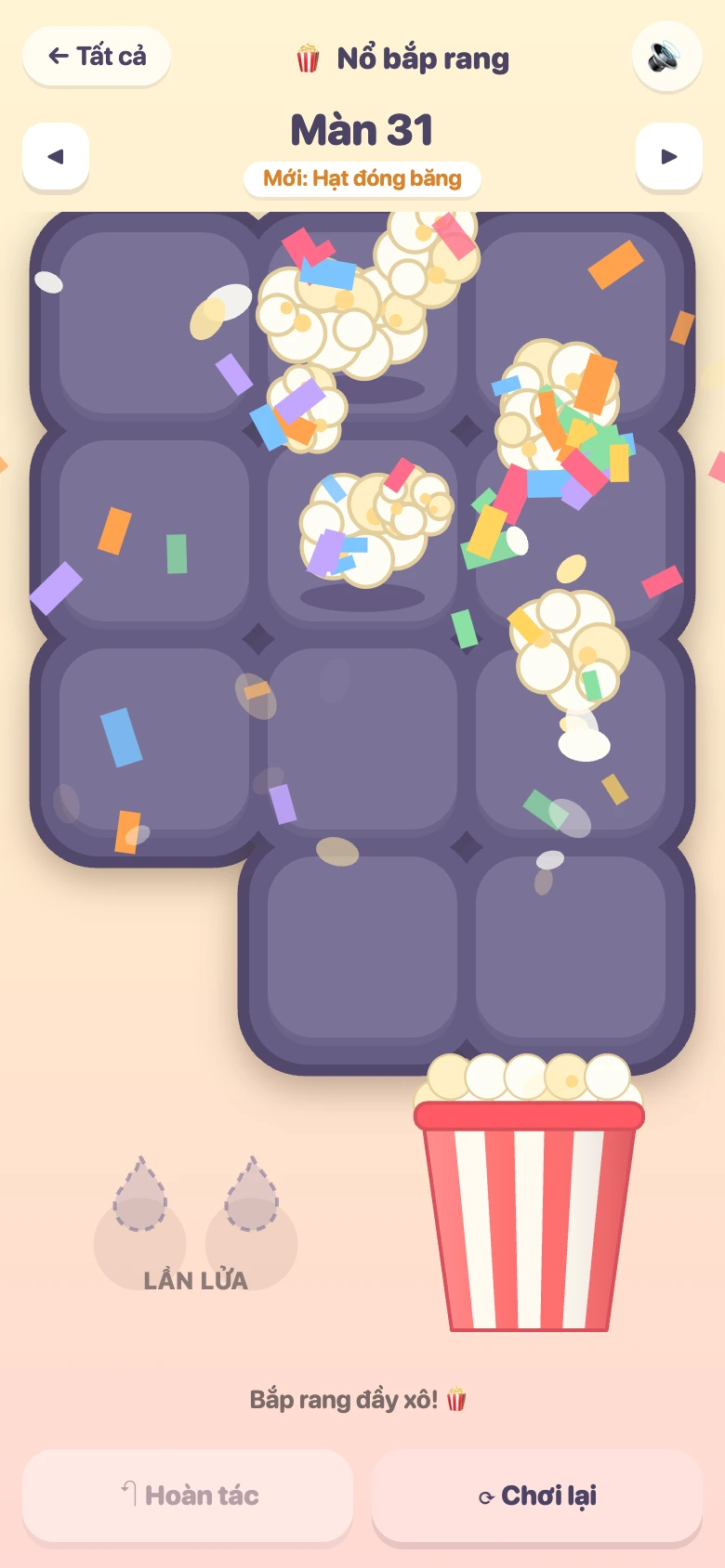
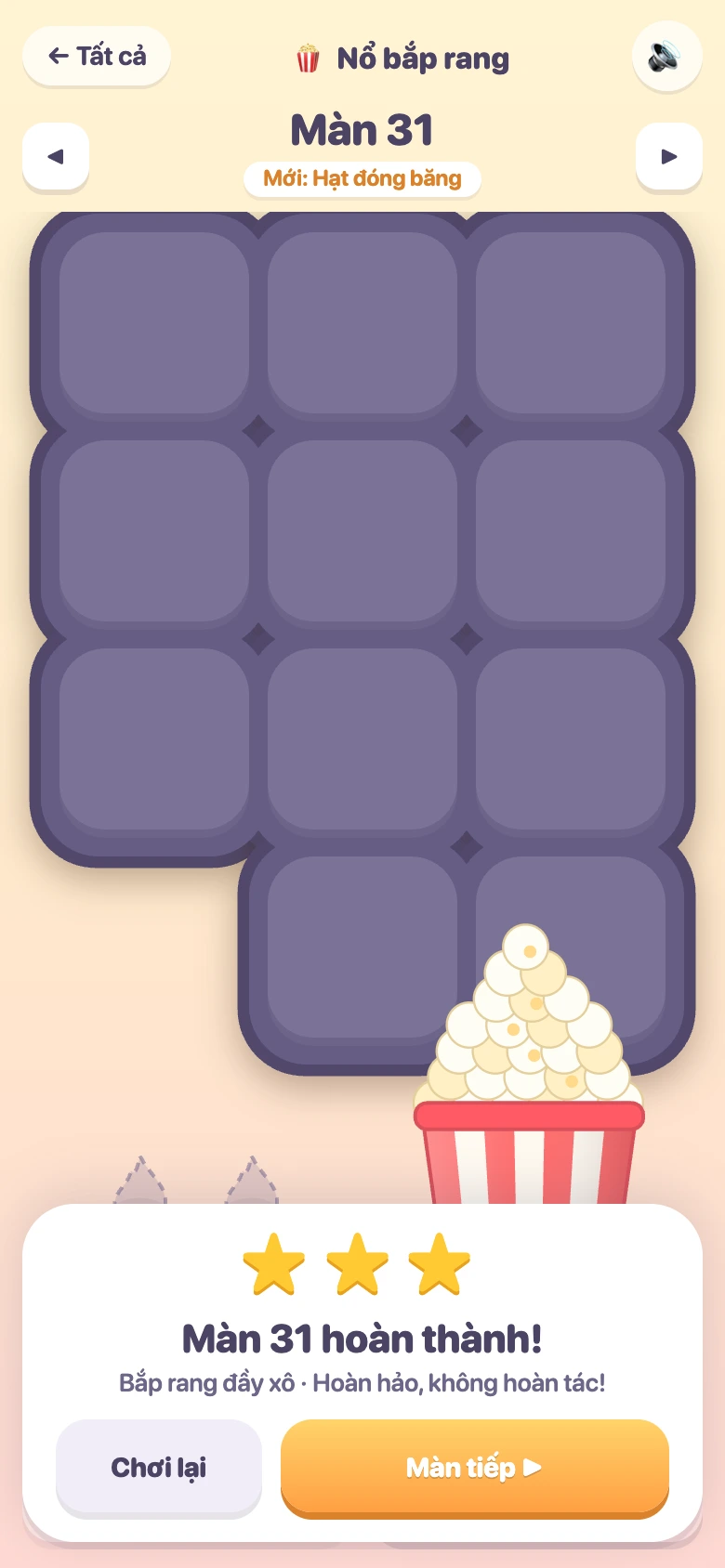
A hot pan full of kernels. Each tap adds heat to one kernel; when it reaches its limit it pops and pushes heat into its neighbours, which can pop in turn. You get only one to three flames per level, so the difficulty lives entirely in which kernel you light and in what order.
The design rests on four pillars:
- Few taps, lots of thinking. A level takes 15–60 seconds and 1–3 taps.
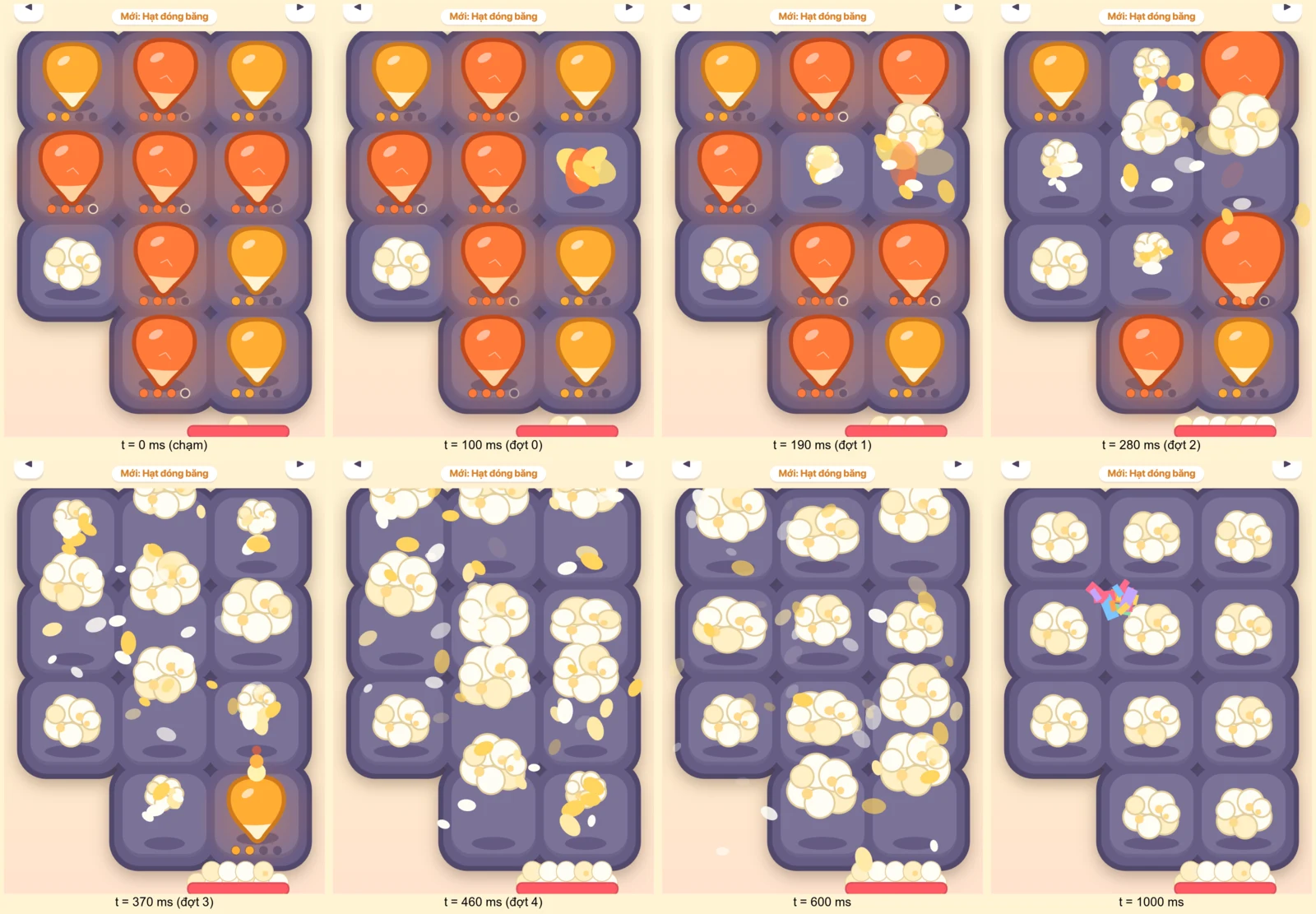
- Satisfying feedback. Every tap plays a timed chain (90 ms per wave), with a sound that climbs in pitch wave after wave.
- Fair. Every level is generated from its solution, so it is always solvable.
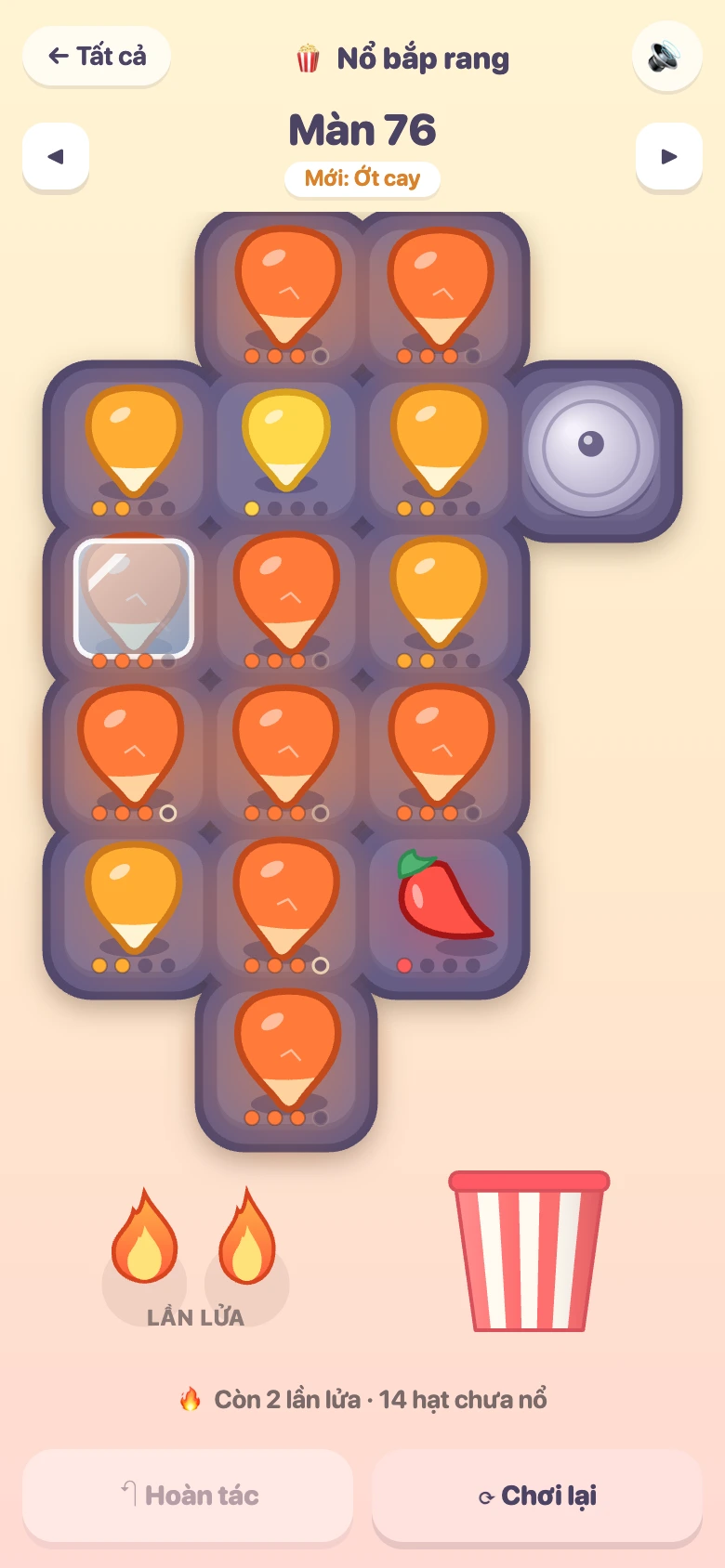
- Readable in one second. Heat is shown with four pips, colour and wobble; dangerous chili tiles glow red.
Prototype first
The game started as a single-file HTML5 Canvas prototype, which you can play by opening its capsule in the machine on the home page. Levels are procedurally generated and deterministic per level number, which made it possible to tune difficulty tiers, timing and sound until the core loop felt right before writing any Unity code.
Porting to Unity without losing the feel
The prototype became the source of truth for the mobile version:
- Pure C# core. All rules, level generation, difficulty measurement, undo and stars live in
Popcorn.Core, an assembly that does not referenceUnityEngine. The Unity layer only replays the result of each tap. - Golden data from the prototype. A Node script loads the prototype’s game logic and exports reference levels. EditMode tests check that the C# generator reproduces those levels exactly, down to the random number generator.
- Tests that guard the design. Beyond rules and edge cases, the suite verifies that every baked level (1–1000) is cleared by its own solution and cannot be solved with fewer flames than it gives you.
What ships in v1.0
Endless levels with six difficulty tiers, ice and chili mechanics, boosters, daily check-in rewards with streak chests, star titles, rewarded and interstitial ads with a consent flow, and minimal analytics.